wellness
Prenzlauer Berg's Local Fermented Foods Boost Your Gut Health
From the kimchi crocks at Mauerpark's weekend market to the kefir on the shelves at Bio Company, Prenzlauer Berg has quietly become one of Berlin's best neighbourhoods for feeding your microbiome.
How we reported this
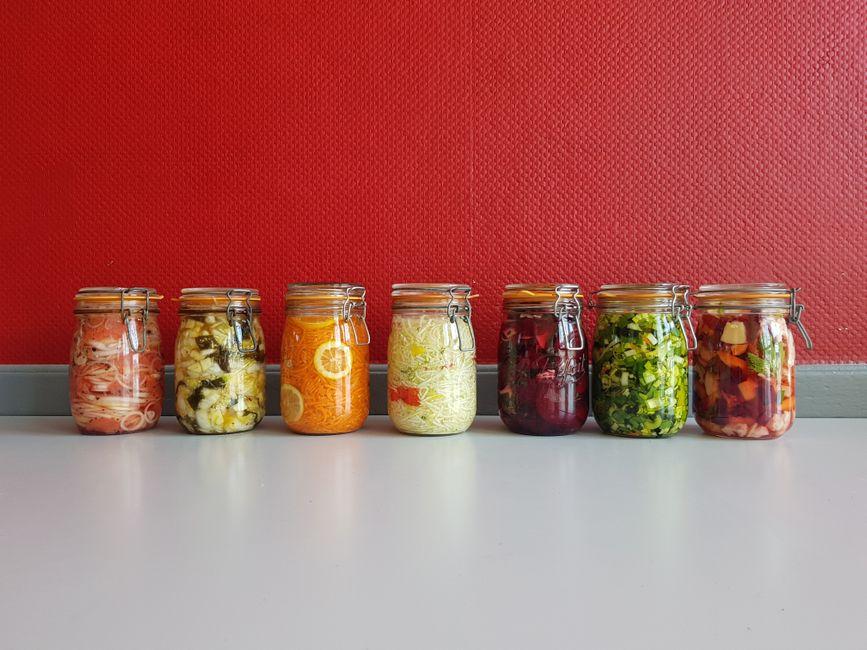
The fermented food section at the Bio Company on Schönhauser Allee has doubled in shelf space since January. That single retail fact tells you something about where consumer appetite is heading in Prenzlauer Berg right now, and why gut health has moved from niche wellness obsession to mainstream grocery logic in a matter of months.
Interest in the gut microbiome has been building for years, but 2026 has brought a particular intensity to the conversation. Ongoing research, including a major longitudinal study published in Nature Microbiology in March, continues to link microbiome diversity to outcomes ranging from immune function to mood regulation. Gastroenterologists at the Charité campus in Mitte report a measurable uptick in patients asking specifically about dietary interventions before reaching for prescriptions. Fermented foods sit right at the centre of that shift.
What's Actually Available Around the Kiez
Prenzlauer Berg is unusually well-stocked for this particular dietary moment. The Saturday and Sunday Mauerpark Flohmarkt, running every weekend along Bernauer Strasse, hosts at least four regular vendors selling live-culture products: raw sauerkraut in stoneware crocks, house-made kombucha in 500ml swing-top bottles (currently priced between €4 and €6), and Korean-style kimchi from a stall that has traded there since 2019. These are unpasteurised products, which matters, heat treatment kills the beneficial bacteria that make fermented foods worth eating in the first place.
For something more consistent mid-week, the Kollwitzplatz farmers' market, held every Thursday and Saturday, carries sourdough from two Berlin bakeries that ferment their starters for a minimum of 48 hours, a process that reduces phytic acid and increases the bioavailability of minerals like zinc and magnesium. A loaf runs around €5.50. The market also stocks traditionally lacto-fermented pickles from a Brandenburg farm cooperative, Havelbauer, which delivers to the market directly each Saturday morning.
Mitte-based health food chain Alnatura has a branch on Pappelallee and stocks a reliable range of live-culture yoghurts, water kefir, and raw apple cider vinegar year-round. For the more adventurous, the Korean grocery Hanaro on Sredzkistrasse carries doenjang, fermented soybean paste, which functions similarly to Japanese miso and integrates easily into weekday cooking.
Understanding What You're Actually Buying
Not all fermented products deliver the same benefit, and label literacy matters. A 2024 review by the German Nutrition Society (Deutsche Gesellschaft für Ernährung) found that roughly 60 percent of commercially available sauerkraut products in German supermarkets had been pasteurised, effectively neutralising their probiotic content. The distinguishing factor is simple: live-culture products must be refrigerated and will typically show a shorter shelf life, two to six weeks rather than months. If it's shelf-stable at room temperature, the bacteria are almost certainly gone.
Kefir is worth singling out. A 250ml serving of traditional milk kefir contains anywhere from 10 to 34 distinct strains of bacteria and yeasts, depending on the culture source, a diversity that commercial yoghurts, which typically rely on two or three strains, cannot match. The Bio Company on Schönhauser Allee stocks Mifroma and the Berlin-produced Landgut Pretschen kefir, the latter sourced from grass-fed cows in the Spreewald region and priced at €1.89 for 500ml.
The practical starting point is modest: nutrition researchers generally suggest that incorporating two to three servings of fermented foods daily, a spoonful of sauerkraut with lunch, kefir in the morning, miso stirred into soup at dinner, is enough to begin shifting microbiome composition within two to four weeks. None of this requires a dramatic dietary overhaul. It requires a Thursday morning detour through Kollwitzplatz. As always, anyone with a specific digestive condition should check with their GP or a registered nutritionist before making significant dietary changes, the Prenzlauer Berg district health office on Fröbelstrasse can provide referrals to local practitioners.